

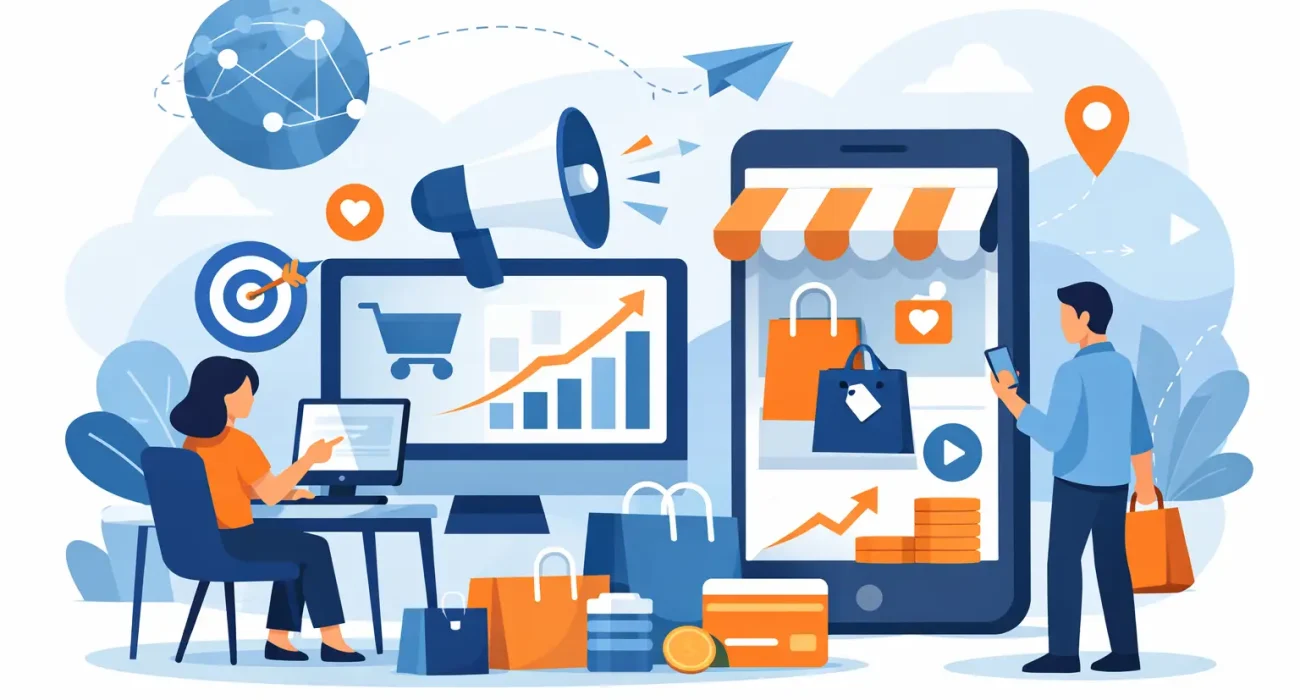
A retailer can have the right products, fair pricing, and a great in-store experience – and still lose sales because customers never find them at the right moment. That is why digital marketing for retailers is no longer a side effort. It is part of how modern retail attracts attention, converts interest, and keeps customers coming back.
For retailers, the challenge is rarely just visibility. It is visibility that leads to action. A campaign that gets clicks but does not bring store visits, inquiries, or purchases is not doing enough. The strongest retail marketing approach connects digital activity to real business outcomes, whether that means more walk-ins, more online orders, stronger repeat business, or better use of existing inventory.
What digital marketing for retailers should actually achieve
Retail marketing often gets treated as a set of disconnected tasks like posting on social media, running ads, updating a website, and sending promotions. The problem is that disconnected tactics usually create disconnected results. A retailer needs a system where each channel supports the next step in the customer journey.
At a practical level, digital marketing for retailers should help customers discover your business, trust your brand, and take action quickly. That action could be visiting your store, messaging for product availability, placing an order online, or returning for another purchase. If the marketing is working but your sales process is weak, results stall. If your store systems are strong but nobody sees your offer, growth also stalls. Retail performance depends on both sides working together.
This is where many businesses make avoidable mistakes. They spend on advertising before their website is ready. They post consistently but do not highlight offers that match customer demand. They collect customer data at the point of sale but never use it to encourage repeat purchases. Good retail marketing is not about being active everywhere. It is about being useful in the places that influence buying decisions.
Start with the customer journey, not the channel
Retail customers do not think in channels. They think in needs. Someone may see a product on Instagram, search for your store on Google, check reviews, visit your website, then walk into the shop later that day. Another customer may find your business through a map listing and message you directly before buying. The path is rarely linear.
That is why retailers should begin with the customer journey. Ask where people first hear about your business, what information they look for before buying, and what usually stops them from purchasing. In some cases, the issue is poor local search visibility. In others, it is unclear pricing, outdated social pages, or a website that does not work well on mobile.
When the journey is clear, marketing decisions become more practical. You can prioritize the channels that actually influence sales rather than spreading budget across every available platform. For a local retailer, that often means getting the basics right first: accurate business information, strong local SEO, a fast website, visible promotions, and consistent communication.
Your website is not a brochure
Many retailers still treat the website as something customers may look at if they are curious. In reality, it often acts as the first store visit. If a customer lands on your site and cannot quickly understand what you sell, where you are located, whether items are available, or how to contact you, you are creating friction before the sale even starts.
A retail website should support action. That means clear product categories, mobile-friendly design, visible contact details, store location, current offers, and simple ways to inquire or buy. For some retailers, a full e-commerce setup makes sense. For others, especially businesses balancing in-store and online demand, a product catalog with inquiry options may be more practical. It depends on product type, delivery capacity, staffing, and customer buying habits.
The key is to build for how customers actually shop. If most buyers want to confirm stock before visiting, your site should make that easy. If impulse purchases drive revenue, promotional visibility matters more. If repeat customers are central to your business, then the website should support loyalty, not just first-time discovery.
Local search matters more than many retailers think
For retailers serving a defined area, local visibility is often the fastest path to measurable results. Customers searching for products nearby usually have stronger purchase intent than customers casually browsing social content. If your business does not appear clearly in relevant local searches, you are missing people who are already close to making a decision.
Local SEO is not only about ranking. It is about accuracy, credibility, and convenience. Your business name, address, phone number, hours, product relevance, and customer reviews all influence whether someone chooses you over a competitor. A retailer with average branding but clear and trusted local presence can outperform a better-looking competitor with weak local visibility.
There is also a timing factor. Many retail purchases happen quickly. A customer searches, compares a few options, and acts. If your listing, website, and contact process are all aligned, you reduce hesitation. If details are inconsistent or outdated, you increase the chance of losing the sale.
Social media should support retail demand, not distract from it
Retailers are often told they need to post constantly. That advice is only partly useful. Frequency matters less than relevance. A social media presence should help customers see what is new, what is available, what is popular, and why your store is worth visiting or buying from.
The best retail social content usually has a commercial purpose even when it feels casual. New arrivals, limited-time offers, seasonal collections, best sellers, product demonstrations, and customer favorites all work because they help buyers move closer to a decision. Content that looks polished but says nothing about value, availability, or urgency tends to perform poorly in real business terms.
This is also where context matters. A fashion retailer, electronics store, specialty shop, and supermarket all need different content rhythms. Some products need visual storytelling. Others need price clarity and convenience. Retailers should not copy another brand’s content style unless it matches how their own customers buy.
Paid advertising works best when operations are ready
Paid ads can bring fast traffic, but traffic only helps when the rest of the business is prepared to convert it. Before increasing ad spend, retailers should check whether landing pages are clear, product information is current, response times are acceptable, and promotions are realistic from a stock and staffing perspective.
This is where a lot of wasted budget happens. Ads drive interest, but the store team is not informed about the campaign. Featured products are unavailable. The website is slow. Messages go unanswered. Marketing can generate demand, but operations still have to capture it.
For retailers with multiple priorities, the smartest approach is usually controlled testing. Run focused campaigns around proven products, local audiences, or seasonal demand. Measure what happens after the click, not just the click itself. A smaller campaign with strong follow-through often beats a larger campaign with weak execution.
Retail data is more valuable than more content
Many retailers already have useful data and do not use it well. Purchase history, customer inquiries, best-selling categories, seasonal demand, and in-store trends can all shape better marketing decisions. Instead of guessing what to promote, retailers can focus on what people already buy, ask about, or respond to.
This is one reason integrated systems matter. When your website, POS, promotions, and customer communication are disconnected, your team works harder and sees less clearly. When they are aligned, marketing becomes more precise. You can promote products based on demand, follow up with past customers, and spot patterns early.
For businesses that want growth without unnecessary complexity, this combination of operational visibility and digital execution is often where the real improvement happens. It is not just about generating leads. It is about building a retail setup that can respond to those leads consistently.
A smarter approach to digital marketing for retailers
The most effective retail marketing is practical. It supports how the business actually runs. It respects budget, staffing, seasonality, and customer behavior. It also accepts that not every channel deserves equal attention.
A retailer may need stronger local SEO before paid ads. Another may need a better website before investing in social campaigns. Another may already have traffic but need better follow-up and repeat customer strategy. There is no single formula, which is why tailored implementation matters more than generic advice.
At SDQ Tek, this is where the combination of business technology and digital support becomes especially valuable for retailers. Marketing performs better when the website, store systems, customer touchpoints, and reporting are working together instead of being managed in isolation.
Retail growth usually does not come from one campaign. It comes from removing friction, improving visibility, and making it easier for customers to buy. If your marketing feels busy but sales do not reflect the effort, the next step is not more activity. It is a better-connected strategy built around how your retail business actually operates.