

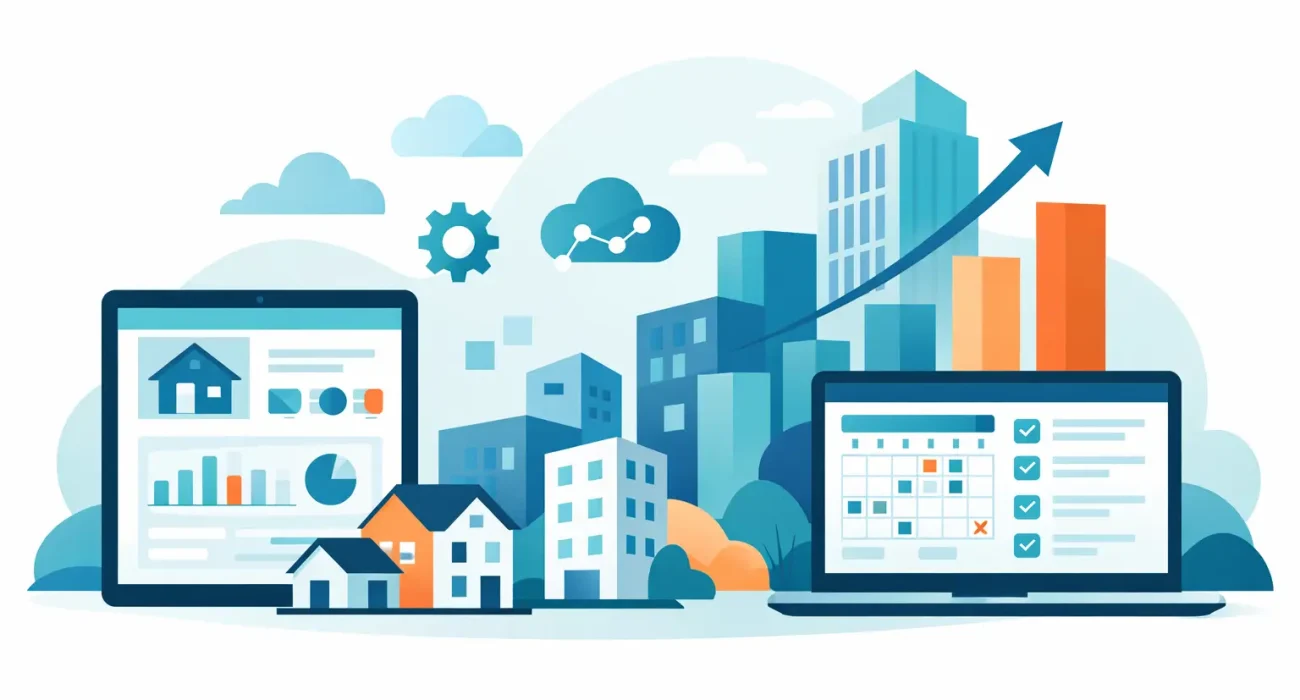
A missed rent reminder, a delayed maintenance update, and a leasing team working from separate spreadsheets can quietly turn into lost revenue. That is why property management systems have become a practical requirement for real estate businesses that want tighter control, faster service, and fewer operational gaps.
For property owners, managers, and developers, the issue is rarely a lack of effort. The real problem is fragmentation. Leasing data sits in one place, accounting in another, maintenance requests in group chats, and tenant communication across email and WhatsApp. When that happens, staff spend more time chasing information than managing the property itself.
Why property management systems matter
Property operations are detail-heavy by nature. Every unit, tenant, contract, payment cycle, service request, and renewal date creates another point where mistakes can happen. A good system brings those moving parts into one environment so teams can work with current information instead of outdated records.
That central visibility has direct business value. Managers can see occupancy trends faster, monitor rent collection without manual checking, and respond to maintenance issues before they become larger complaints. Owners get clearer reporting. Staff get fewer repetitive tasks. Tenants get a more consistent experience.
This is where many businesses see the shift from reactive management to controlled operations. Instead of spending the day fixing process issues, teams can focus on leasing performance, tenant retention, and asset value.
What strong property management systems should include
Not every business needs the same setup. A small residential portfolio has different needs than a mixed-use commercial operation or a large multi-property group. Still, the most useful property management systems tend to cover the same core functions.
Lease and tenant management
A system should make it easy to track tenant details, lease terms, move-in and move-out dates, renewals, deposits, and unit history. This reduces reliance on manual files and helps prevent missed dates that affect revenue or occupancy planning.
Billing and payment tracking
Rent collection should not depend on reminders from memory. A dependable platform helps teams issue recurring charges, monitor overdue balances, track receipts, and maintain cleaner financial records. This is especially valuable when multiple properties or unit types are involved.
Maintenance coordination
Maintenance is one of the biggest pressure points in property operations. Without a system, requests can be delayed, duplicated, or forgotten. With the right workflow, teams can log issues, assign tasks, track status, and keep a clear history of work completed.
Reporting and portfolio oversight
Managers and owners need reports that show what is happening across the business. Occupancy, arrears, revenue, maintenance volume, and lease expirations all matter. Good reporting supports better decisions, especially when growth is the goal.
User access and operational control
Different people need different levels of access. Finance staff, leasing teams, site managers, and business owners should not all see the same information in the same way. A well-structured system supports accountability without making daily work harder.
The cost of using disconnected tools
Some businesses delay software adoption because spreadsheets and basic accounting tools seem cheaper. On the surface, that can look sensible. In practice, disconnected tools often create hidden costs that are harder to measure at first.
Staff lose time entering the same data twice. Errors increase because records are updated in one place but not another. Tenant service slows down because no one has a complete view of the issue. Reporting takes longer at the end of the month. As the portfolio grows, these problems multiply.
There is also a reputational cost. When tenants experience inconsistent communication, delayed repairs, or billing confusion, trust drops quickly. For property businesses, operational quality affects both retention and brand perception.
Choosing property management systems for your business
The best choice depends on how your operation runs today and where you want it to be in the next one to three years. A system that works for a small landlord may be too limited for a developer managing multiple buildings. At the same time, enterprise-level complexity can slow down a smaller team that simply needs better control.
Start with your workflows, not the software demo. Look at how leases are created, how payments are tracked, how maintenance is handled, and how reporting is produced. If those processes are unclear internally, even the best platform will struggle to deliver results.
It also helps to think beyond features. Implementation quality matters just as much as the software itself. If the setup does not match your business model, if staff are not trained properly, or if support is difficult to reach, adoption will stall.
That is one reason many businesses prefer a local technology partner instead of a distant software seller. In a market like Qatar, local business practices, language preferences, service expectations, and responsiveness all shape whether a system works well day to day.
Common mistakes during implementation
The first mistake is trying to digitize a weak process without fixing it. Software can improve efficiency, but it does not automatically solve poor approval flows, unclear responsibilities, or inconsistent data entry habits.
The second mistake is underestimating migration work. Old tenant records, unit data, contracts, and financial information need to be cleaned before they are imported. If bad data goes into the new system, bad reporting comes out.
The third mistake is treating training as optional. Teams need more than a quick handover. They need to understand how the system fits their daily responsibilities and why the change matters. When employees see the practical value, adoption becomes much easier.
Where the real return comes from
Businesses often ask whether a property management platform is worth the investment. The answer depends on volume, complexity, and current inefficiency. But the strongest return usually comes from a combination of time savings, better financial control, and improved tenant service.
When rent tracking is accurate, collections improve. When maintenance is documented, follow-up improves. When reporting is available quickly, managers make stronger decisions. When staff spend less time on manual coordination, they have more time for leasing, occupancy, and growth.
Some benefits are also defensive. Better records reduce disputes. Clearer workflows reduce dependence on specific employees. More consistent communication lowers the risk of tenant frustration escalating into churn or complaints.
Property management systems and business growth
Growth puts pressure on every weak process. A team may manage a handful of properties with manual tools, but once more units, more tenants, and more staff are added, informal methods start breaking down.
This is where technology becomes a growth tool rather than just an administrative one. Property management systems create structure that supports expansion. New properties can be onboarded with more consistency. Reporting remains manageable. Service standards are easier to maintain across locations.
For businesses that also care about market visibility, software should not be viewed in isolation. Operational systems work best when they support the wider business. A company with efficient internal workflows is better positioned to respond to leads, manage reputation, and support a stronger digital presence. That broader view is part of why businesses often work with partners like SDQ Tek, who understand both operational technology and growth-focused digital support.
What decision-makers should ask before moving forward
Before selecting a platform, ask a few practical questions. What specific bottlenecks are costing the business time or money today? Which teams will use the system every day? What reports do owners or managers need regularly? What level of support will be required after launch?
It is also worth asking what success should look like after implementation. Faster rent collection, fewer maintenance delays, cleaner reporting, and better tenant communication are all measurable outcomes. Clear targets make it easier to evaluate whether the system is delivering real business value.
A good software decision should reduce friction, not add another layer of complexity. The goal is not to buy more technology. The goal is to run the property business with more control, better visibility, and stronger consistency.
The right system does not need to do everything on day one. It needs to solve the right problems well, support the way your team works, and give your business room to grow with confidence.