

The lunch rush exposes every weakness in your operation. A card terminal freezes, a server walks back and forth to process payments, and a line starts building at the counter. That is usually when owners realize a guide to restaurant payment systems is not just about taking payments – it is about service speed, staff efficiency, reporting accuracy, and customer experience.
For restaurants, payment systems sit at the center of daily operations. They affect table turns, order accuracy, cash control, tipping, and even how quickly your team can close out at the end of the day. If you are choosing a system for a new location or replacing an outdated setup, the right decision comes from understanding how payments connect to the rest of the business.
What restaurant payment systems actually include
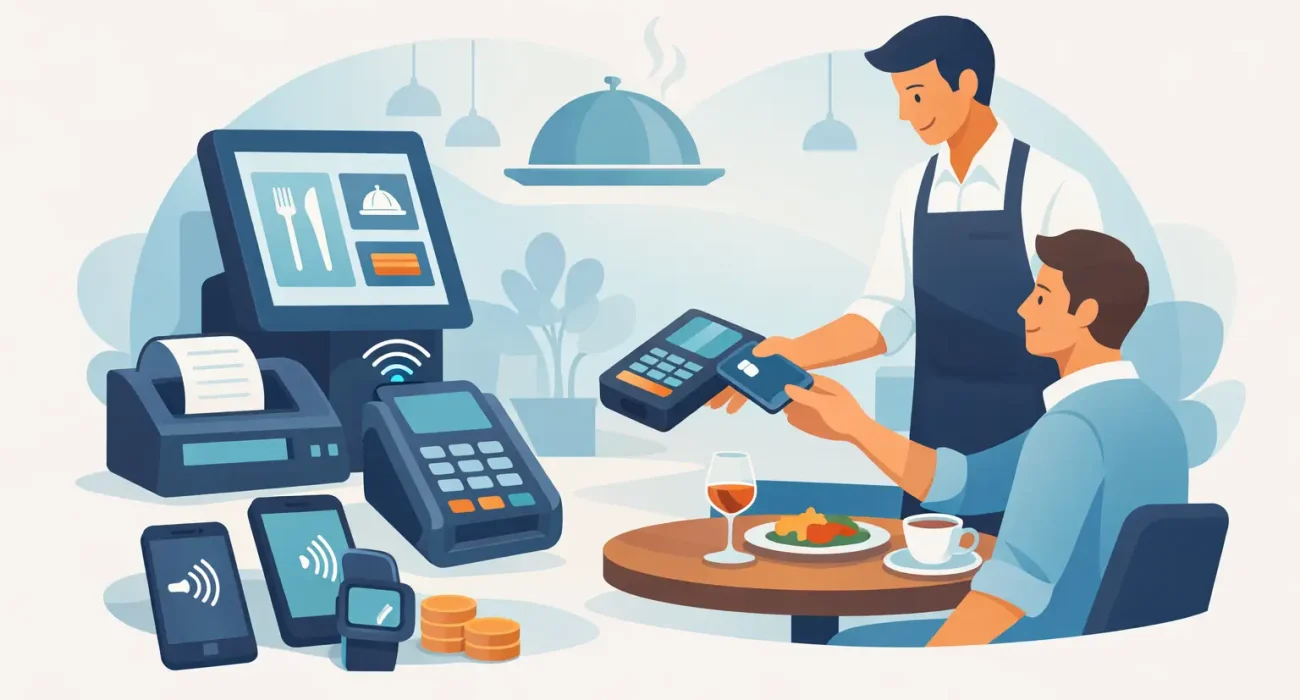
Many owners think of payment systems as a card machine and little more. In practice, the setup is broader. A modern restaurant payment system often includes the POS software, payment terminal, receipt handling, cash drawer support, handheld devices, back-office reporting, and integrations with ordering channels.
That matters because payment processing does not happen in isolation. If a server enters an order in one system and payment is processed in another, errors and delays follow. If online orders, QR menu orders, and in-store transactions are all separated, reconciling sales becomes harder than it should be.
A strong setup brings those parts together so that sales data, taxes, discounts, payment methods, and staff activity are all tracked in one place. For busy operators, that is where the real value starts.
A guide to restaurant payment systems by service model
The best system depends on how your restaurant operates. A quick-service concept has different priorities than a fine dining venue or a cafe with heavy delivery volume.
Quick-service restaurants usually need speed first. Counter service, shorter average ticket times, and high transaction volume mean the payment flow has to be fast and simple. Tap-to-pay, mobile wallets, and easy split tender options are often more important here than advanced table management.
Full-service restaurants need more flexibility. Servers may open tables, transfer items, split checks, apply modifiers, and take payment at the table. In that environment, handheld terminals can reduce wasted movement and improve customer convenience, but only if the devices stay reliably connected and sync correctly with the POS.
Cafes and casual dining businesses often sit in the middle. They may want counter ordering during the day, table tabs at night, and integrated online ordering throughout. For them, the right payment system is less about one standout feature and more about balancing several functions without creating extra work for staff.
Ghost kitchens and delivery-heavy brands have another challenge. Their payment systems must work cleanly with online ordering, aggregators, kitchen workflows, and reporting. If each channel reports differently, profit visibility suffers.
Core features worth paying attention to
When comparing options, owners often focus on hardware price first. That is understandable, but it can lead to expensive mistakes. The better approach is to look at how the system performs across day-to-day use.
Payment flexibility is one of the first areas to review. Customers expect to pay by chip card, tap, phone wallet, and sometimes through QR-based checkout. The more friction you remove from payment, the less likely you are to lose time at the point of sale.
POS integration is just as important. Your payment terminal should communicate directly with the POS so totals are pushed automatically, reducing manual entry mistakes. This also improves reporting because each payment maps clearly to the corresponding order.
Security should not be treated as a technical side issue. Tokenization, PCI-aware processing practices, user permissions, and secure device management all matter. A weak setup does not only create compliance risk. It can also damage customer trust and disrupt operations if a problem occurs.
Reporting quality deserves close attention as well. Owners should be able to track sales by payment type, staff performance, peak hours, refunds, voids, and settlement status without exporting data into multiple spreadsheets. Good reporting supports better staffing, pricing, and cost control.
Offline capability can be overlooked until internet service becomes unstable. In a restaurant, even a short interruption during peak hours can create major disruption. Systems that continue operating during temporary connectivity issues are often worth the investment.
How payment systems affect service and revenue
A restaurant payment setup should not be judged only by whether transactions go through. It should be judged by what it does to the overall guest journey and the daily workload of your team.
Table-side payment, for example, can shorten the final stage of service. Guests do not have to wait for a card to be taken away and returned. That often improves table turnover and can create a better impression of the experience. Still, it is not automatically the right move for every concept. Some restaurants prefer a more traditional checkout flow, especially where hospitality style is more formal.
QR-based payment can also help, especially in casual environments where customers are comfortable paying from their phones. But it depends on your audience. In some markets, many guests still prefer card-present payment with staff assistance. The right decision should reflect customer behavior, not just trends.
Faster and clearer payments also reduce internal leakage. Better controls around discounts, refunds, cash handling, and staff permissions can make a noticeable difference over time. Even small improvements in transaction accuracy and end-of-day reconciliation can save hours each week.
Common mistakes when choosing a restaurant payment system
One common mistake is choosing based on the lowest upfront cost. A cheaper setup may look attractive, but if it slows service, lacks support, or forces staff into workarounds, the hidden cost shows up quickly.
Another mistake is buying a generic retail solution and expecting it to handle restaurant complexity. Restaurants need checks, modifiers, kitchen coordination, table management, tipping logic, and often multi-channel ordering support. A system built mainly for standard retail transactions may struggle in a hospitality environment.
Support quality is another area where businesses underestimate risk. If a terminal fails on a Friday evening, you do not want to file a ticket and wait. You want responsive help from a partner who understands your operation and can resolve issues quickly.
It is also a mistake to ignore future growth. A single-location setup may work today, but if you plan to expand, add delivery channels, launch loyalty features, or connect accounting tools later, the system should be able to scale with you.
What to ask before you commit
Before signing with any provider, ask how payments, POS, online ordering, and reporting work together in practice. Ask what happens during internet outages. Ask how settlements are handled, how refunds are tracked, and how user permissions are controlled.
You should also ask about onboarding. A system is only as useful as the implementation behind it. Menu setup, tax configuration, staff training, device installation, and post-launch support all affect whether the rollout succeeds.
For restaurants operating in Qatar, local implementation matters even more. Tax settings, payment preferences, language needs, receipt formatting, and on-site support expectations can vary by market. Working with a partner that understands local operating conditions can reduce friction and speed up adoption.
Choosing the right guide to restaurant payment systems for your business
The right guide to restaurant payment systems does not point every business to the same answer. It helps you match technology to your service model, customer expectations, and growth plans.
If your priority is faster service, look closely at integrated POS payments and handheld devices. If your main issue is fragmented channels, focus on a system that unifies dine-in, takeaway, and online orders. If you are worried about control, prioritize reporting, permissions, and reconciliation tools.
For many restaurants, the best outcome comes from working with a technology partner that can look beyond the terminal itself. Payment systems affect operations, customer experience, and business visibility. When your POS, ordering flow, and support structure are aligned, payments stop being a bottleneck and start becoming part of a more efficient business. That is the point where technology stops feeling like an expense and starts proving its value every day.