

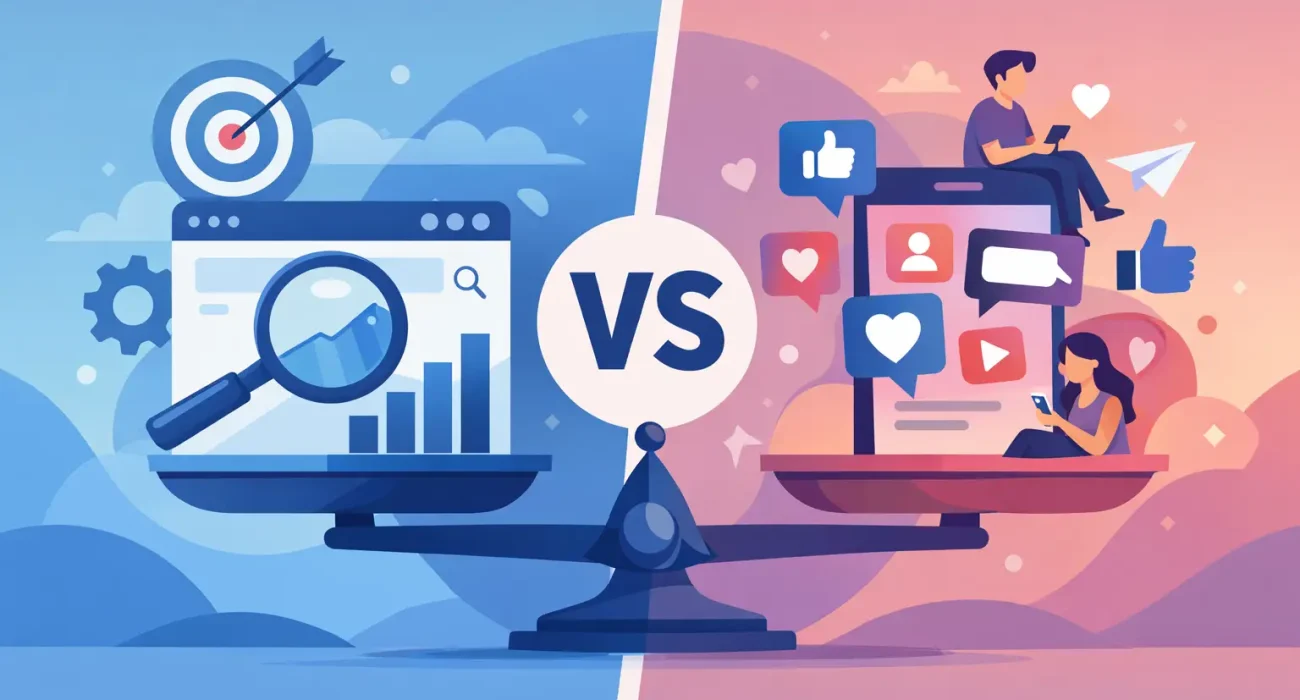
A business can spend months posting on social media, gain a few spikes in attention, and still see little impact on inquiries. Another business can invest in search visibility, rank for the right terms, and bring in steady leads without publishing daily content. That is why the debate around seo versus social media matters. It is not just a marketing question. It is a business decision that affects cost, visibility, and how reliably you attract customers.
For most companies, the real answer is not about declaring one channel better than the other. It is about understanding what each one is built to do and where each delivers the strongest return. Business owners in competitive markets, including Qatar, often need both. The priority depends on how customers search, how fast results are needed, and what kind of buying journey the business is working with.
Understanding seo versus social media
SEO helps your business appear when people actively search for products, services, or solutions. Social media helps your business get seen while people are browsing, engaging, or following content. That difference sounds simple, but it changes everything.
Search traffic usually comes with clearer intent. If someone searches for a restaurant POS system, property management software, website design services, or local SEO support, they are already looking for an answer. Your job is to appear at the right moment with a page that matches that need.
Social media works differently. It can build awareness, trust, and familiarity before a customer is ready to buy. It gives businesses a place to show personality, highlight results, answer questions, and stay visible in the market. For some industries, that ongoing visibility is valuable. For others, it supports the sales process rather than driving it directly.
When SEO delivers stronger business value
SEO is often the stronger investment when your customers use search engines to compare providers, check pricing, or find a solution near them. This is especially true for service businesses, software providers, hospitality brands, and companies with location-based demand.
A well-optimized website keeps working after the initial investment. A service page, product page, or location page can continue generating traffic long after it is published. That makes SEO attractive for companies that want more predictable lead generation and better long-term return.
Another advantage is credibility. Businesses that rank well in search are often perceived as more established and trustworthy. That matters when customers are choosing between several providers. If your website appears clearly, loads quickly, explains your services well, and answers real customer questions, search traffic becomes more than visibility. It becomes conversion support.
SEO also gives businesses more control over high-intent traffic. You are not depending on a platform algorithm to decide who sees your content that day. You are building relevance around specific searches tied to your services.
That said, SEO takes time. It is rarely the fastest channel. Results depend on competition, website quality, content strength, technical setup, and consistency. A business that needs immediate reach may find social media more useful in the short term while SEO builds momentum.
When social media has the advantage
Social media is often stronger when a business needs fast exposure, frequent audience touchpoints, or visual engagement. Restaurants, retail stores, lifestyle brands, real estate businesses, and customer-facing brands can benefit from strong social presence because the content itself helps sell the experience.
It is also useful when trust is built through repetition. People may not contact a business after seeing one post, but regular visibility can make the brand familiar. Later, when they need that service, they remember the name.
For newer businesses, social media can help fill the gap before SEO gains traction. It allows immediate publishing, quick promotions, and direct interaction with customers. Businesses can highlight offers, showcase completed projects, share updates, and respond to inquiries in real time.
Social media also supports brand perception. A quiet or outdated profile can make a company appear inactive. An active, professional presence can strengthen confidence, especially when customers are researching the business after finding it elsewhere.
The challenge is durability. Social content has a shorter life cycle. A post may perform well for a day or two, then disappear from attention. If a business stops posting, visibility often drops quickly. That means social media usually requires ongoing effort to maintain results.
SEO versus social media for lead quality
If the goal is lead quality rather than general awareness, SEO often has the edge. Search users are usually further along in the decision process. They are looking with purpose. That tends to produce stronger conversion potential.
Social media can generate leads, but the quality varies more. Some users respond out of curiosity rather than immediate need. Others engage with content but never move into serious buying intent. This does not make social media weak. It simply means it plays a different role.
For example, a company offering website development or business software may see better lead quality from search because the customer is actively seeking a provider. A restaurant launching a seasonal campaign may benefit more from social media because the goal is immediate attention and local engagement.
The right choice depends on whether your customer is searching for a solution or discovering one.
Budget, effort, and long-term return
Businesses often compare seo versus social media as if one is cheaper. In practice, each has different cost patterns.
SEO usually requires upfront investment in strategy, technical fixes, page optimization, content development, and ongoing monitoring. The return may take longer, but the value can compound. One strong page can continue producing leads month after month.
Social media often looks less expensive at first because posting can begin quickly. But maintaining quality content, creative design, community management, and campaign consistency takes time and resources. If paid promotion is added, costs can increase significantly.
From a long-term business perspective, SEO tends to deliver stronger compounding value. Social media tends to deliver stronger immediacy and brand visibility. A company focused only on short-term reach may underinvest in search and later face weak lead flow. A company focused only on SEO may miss chances to build brand trust and stay visible between buying cycles.
Why most businesses should not choose only one
The strongest digital strategies usually connect both channels instead of forcing a winner. SEO captures demand. Social media builds familiarity around the brand. SEO supports discovery when intent is high. Social media supports attention, trust, and audience engagement over time.
A customer might first notice your business on social media, then search your company name later. Another customer might find your service through Google, visit your website, and then check your social profiles before making contact. That path is common.
This is why businesses benefit from aligning both channels with the same commercial goals. Your website should be built to convert search traffic. Your social media should reinforce credibility, show activity, and keep your business visible in the market. When both are managed well, they support each other.
For companies that need both operational stability and growth support, this integrated view matters. A dependable technology and marketing partner can help businesses avoid fragmented effort and focus on what actually improves visibility and results.
How to decide what to prioritize first
If your business depends on customers searching for specific services, start with SEO. If your website is weak, slow, outdated, or unclear, that should be addressed first because all digital channels eventually lead back to the website.
If your business needs quick visibility, has strong visual content, or relies on regular promotions, social media may deserve immediate attention. This is often true for restaurants, retail businesses, and brands with frequent customer interaction.
If budget is limited, start where buyer intent is strongest. A smaller but better-targeted SEO strategy can outperform constant social posting with no conversion path. On the other hand, a new business with no audience and no search presence may need social media first to establish visibility while search foundations are built.
For many businesses, the practical answer is phased execution. Strengthen the website, build SEO around core services, and maintain a focused social media presence that supports credibility rather than chasing content volume. That approach is often more sustainable than trying to dominate every channel at once.
At SDQ Tek, this is how digital growth is best approached – not as isolated marketing activities, but as part of a larger business system built for visibility, efficiency, and measurable return.
The better question is not whether SEO or social media wins. It is which channel solves your next business problem more effectively, and whether your digital setup is strong enough to turn that attention into real opportunities.