

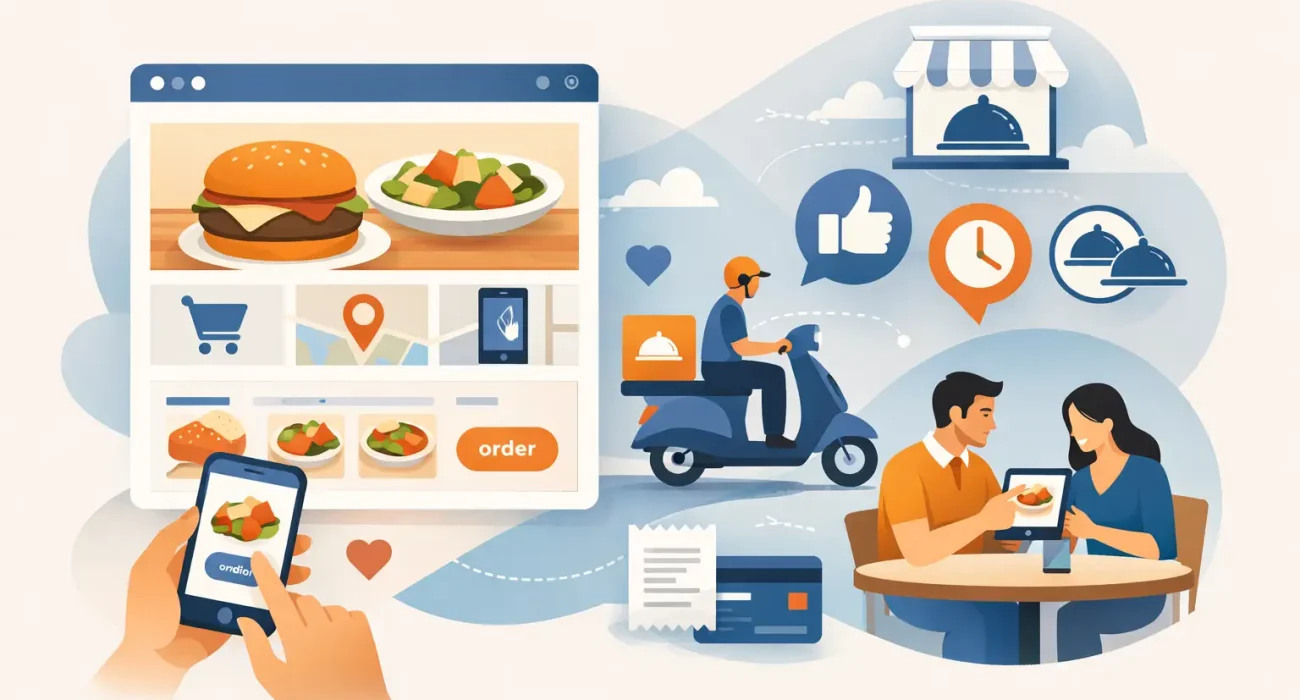
A hungry customer should not have to search through social media posts, download a PDF, or call your restaurant just to see what is available. The best website features for restaurants remove that friction. They give guests the information and actions they need within seconds, while giving restaurant operators a more reliable way to generate orders, reservations, and repeat visits.
For independent restaurants and growing hospitality brands, a website is not simply an online brochure. It is a working part of the customer journey. It should support the way your team operates, present your food properly on mobile devices, and make it easy for people to choose your restaurant over the one nearby.
Best Website Features for Restaurants That Support Revenue
The right features depend on your service model. A quick-service outlet needs ordering speed and location clarity. A fine-dining restaurant may prioritize reservations, atmosphere, and menu presentation. A café with multiple branches needs accurate store information and consistent branding.
Still, the following features solve the most common customer and operational problems.
A mobile-first menu that is easy to update
Your menu is often the most visited page on your website. It should load quickly, display clearly on a phone, and show current prices, descriptions, dietary details, and item availability. A static menu image or outdated PDF creates unnecessary barriers, particularly for customers using mobile data or browsing on the move.
A well-built digital menu gives your team control. You can update a seasonal item, price, special offer, or sold-out dish without waiting for a full website revision. For many restaurants, QR code access is also useful at the table, for takeaway counters, and in printed promotions.
There is a practical trade-off. Too many menu photos can slow the page down, while too little detail can make guests hesitate. Use quality images for signature dishes, but keep the menu structured around clear categories and readable descriptions.
Direct online ordering with clear fulfillment choices
If your restaurant offers delivery or pickup, customers should be able to order with minimal steps. The ordering journey needs clear choices for pickup, delivery, scheduling, payment, and special instructions. Confirmation messages should set realistic expectations about preparation and delivery times.
Direct ordering can help restaurants reduce dependence on third-party marketplaces and retain more control over customer data and brand presentation. That said, marketplace platforms may still be valuable when the goal is discovery in a new area. The best approach is often to use them selectively while making your own website the preferred destination for returning customers.
Ordering should also connect with your operational workflow where possible. If staff must manually re-enter every web order into a separate system, mistakes and delays can quickly affect the guest experience. Integration with restaurant POS software can reduce duplicate work and provide better visibility over sales.
Reservation tools that prevent missed opportunities
For table-service restaurants, reservations should be straightforward on both desktop and mobile. Guests need to see available times, party-size options, location details, and any relevant policies before they confirm. A booking form that feels unclear or asks for too much information can cost you covers.
The reservation experience should match your actual capacity. If your kitchen, seating plan, or peak-hour staffing cannot support a large number of online bookings, set the rules accordingly. Smart availability settings are better than accepting reservations your team cannot comfortably serve.
Confirmation and reminder messages are equally valuable. They reduce no-shows and give guests confidence that their booking has been received. For special occasions or group bookings, the site can also direct customers to a dedicated inquiry process instead of leaving important requests buried in general messages.
Accurate locations, hours, and contact details
Few problems damage trust faster than a restaurant website showing the wrong opening hours. Guests may arrive when the kitchen is closed, call an incorrect number, or travel to an old location. These details should be easy to find on every device and simple for staff to maintain.
For restaurants with multiple branches, each location needs its own page or clearly organized section. Include the address, phone number, operating hours, parking or access notes, delivery area information, and whether dine-in, pickup, or reservations are available at that branch.
Do not assume customers will find this information elsewhere. Social platforms can be useful, but your website should remain the dependable source of truth for your business.
Features That Build Confidence Before a Visit
A restaurant decision is partly practical and partly emotional. Guests want to know the food looks appealing, but they also want confidence that the experience will meet the occasion.
Strong visuals with a clear brand identity
Original food photography, clean design, and a consistent color palette can communicate the standard of your restaurant before a customer walks in. This does not mean every page needs heavy animation or large video files. Fast loading and clear navigation matter more than decorative effects.
Show the atmosphere honestly. If your restaurant is designed for family meals, business lunches, late-night dining, or premium celebrations, the website should make that clear through its images, language, and layout. Misleading visuals may create clicks, but they do not create satisfied guests.
Reviews, social proof, and practical reassurance
Customer feedback can support a booking or ordering decision, especially for guests trying a restaurant for the first time. Short testimonials, relevant awards, event photos, or highlights of popular dishes can help establish credibility.
Use social proof carefully. A page crowded with generic review quotes can feel less convincing than a few specific statements that reflect what guests appreciate, such as service, consistency, portions, or a particular dining experience. If you display reviews, keep them current and authentic.
Practical reassurance matters too. Clearly state allergy guidance, halal information where relevant, accessibility details, payment options, and policies for cancellations or large groups. These details answer questions that could otherwise stop a customer from completing an order or reservation.
Fast contact and event inquiry options
A contact page should do more than display an email address. Give customers a direct way to ask about catering, private dining, corporate orders, birthday events, or partnerships. The form should route inquiries to the right person and ask only for information your team will actually use.
Speed of response matters. A well-designed form cannot compensate for unanswered inquiries. Establish a clear internal process so requests from the website are monitored and followed up promptly.
The Technical Features Guests Notice Indirectly
Guests may never comment on your hosting setup or website code, but they notice the results. Pages that load slowly, buttons that fail, and menus that are difficult to read make a restaurant appear less reliable.
Your website should be responsive across phones, tablets, and desktop screens. It should use secure forms and payments, have clear calls to action, and be maintained as menus, business hours, promotions, and services change. Basic search visibility also matters. If someone searches for your cuisine, neighborhood, or restaurant name, your website needs accurate page titles, location information, and content that search engines can understand.
Accessibility should be part of the build, not an afterthought. Readable text, sufficient color contrast, usable forms, and descriptive image text help more guests use the site comfortably. These improvements usually make the experience better for everyone.
Build Around Operations, Not Just Appearance
The most effective restaurant website is connected to how the business actually runs. Before adding features, identify where customers and staff experience friction. Are calls overwhelming the front desk? Are menus frequently changing? Are online orders being entered twice? Are customers asking the same questions before booking?
Those answers should shape the website plan. A smaller restaurant may benefit most from a fast menu, ordering link, contact details, and local search foundations. A multi-location brand may need branch pages, centralized menu management, integrated ordering, reservation controls, and reporting that supports better decisions.
SDQ Tek approaches restaurant websites as part of a wider business system, combining customer-facing design with practical technology such as POS software and QR code menu solutions. That approach helps operators avoid building a polished website that creates extra work behind the scenes.
A restaurant website earns its value when it makes the next customer action easier and the next staff task more manageable. Start with the points where guests hesitate, then choose features that turn that hesitation into a confirmed order, reservation, or visit.