

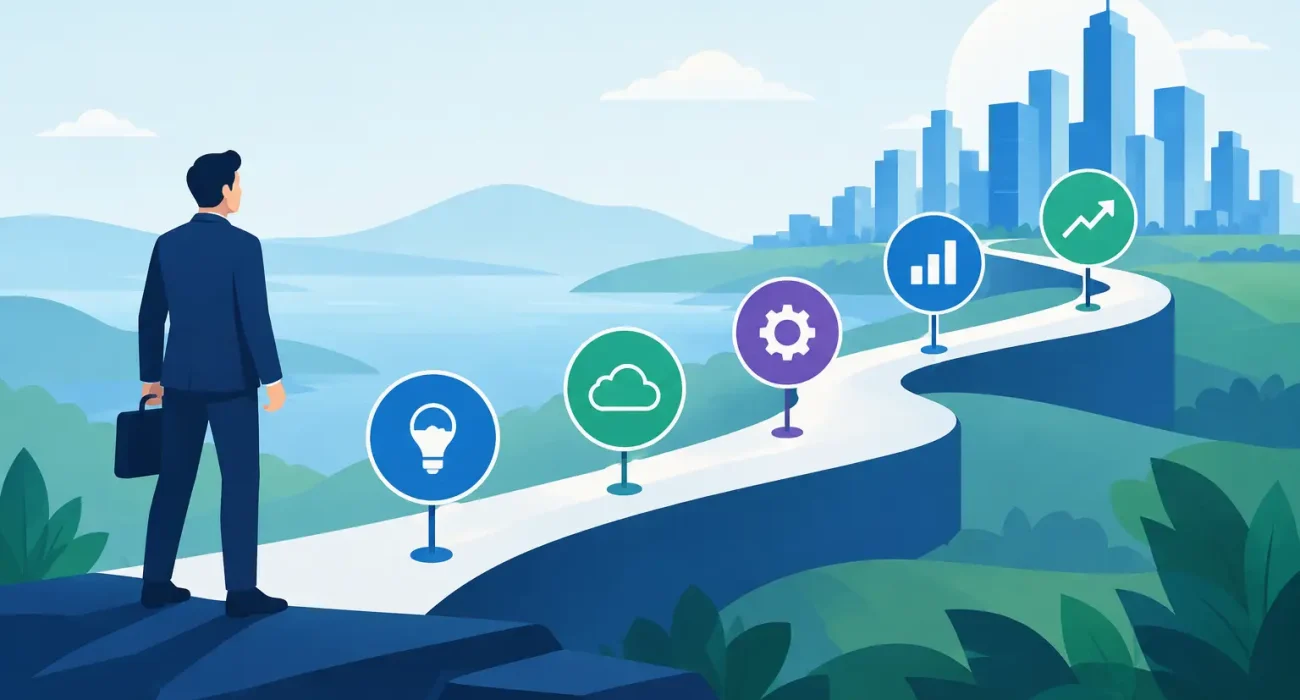
A digital transformation roadmap is not a shopping list of software. For a restaurant owner dealing with slow table turnover, a retailer tracking stock manually, or a property operator managing scattered records, it is a practical plan for removing friction from the work that affects revenue every day.
The strongest roadmaps connect operational improvements with customer growth. They show which systems should be fixed first, how information should move between them, who is responsible for change, and what business result should improve. The goal is not to digitize everything at once. The goal is to invest in the right changes in the right order.
What a Digital Transformation Roadmap Should Deliver
Business owners often start with a broad request: a new website, a POS system, better social media, online ordering, or software for reporting. Each may be useful, but isolated projects can create new gaps. A modern website that sends leads to a manual follow-up process still loses opportunities. A POS system that does not provide useful inventory data limits the value of the investment.
A clear digital transformation roadmap brings these decisions together. It should help your business achieve three outcomes: more efficient internal operations, a more consistent customer experience, and better visibility into performance.
For example, a restaurant may begin by replacing handwritten orders and disconnected payment processes with a restaurant POS system and QR code menu. Once operations are stable, the next phase may connect online visibility, local search optimization, and social media campaigns to bring in more customers. The sequence matters. Promoting a business before it can reliably handle demand can damage the customer experience.
For a retail business, the immediate priority may be accurate inventory, faster checkout, and product reporting. For a property-related business, it may be centralized tenant, unit, payment, and maintenance information. The technology differs, but the planning discipline is the same: start with the operating problem, then choose the right solution.
Start With the Business Problems, Not the Technology
Before comparing platforms or requesting proposals, document where time, money, and customer confidence are being lost. Speak to the people who use the current process every day. Owners may see delayed reporting, while staff may see duplicate data entry or systems that fail during peak hours.
Look closely at your customer journey and your internal workflow. Where do prospects first find you? How do they inquire, book, buy, pay, and return? On the operational side, how are orders entered, stock updated, tasks assigned, and reports produced? The gaps between these steps usually reveal the highest-value priorities.
Use measurable statements rather than general frustrations. Instead of saying, “Our ordering process is slow,” define the issue: “Staff spend two hours each evening reconciling orders and payments.” Rather than, “We need better marketing,” identify the missed opportunity: “Website inquiries are not tracked, and follow-ups are inconsistent.” Specific problems make it easier to select solutions and judge whether they worked.
Build Your Roadmap in Practical Phases
A phased approach reduces disruption and gives your team time to adopt each change. The exact schedule depends on business size, budget, existing systems, and the urgency of the problem, but most small and mid-sized businesses benefit from four stages.
- Assess and prioritize. Review current tools, processes, data, staff capabilities, and customer touchpoints. Rank initiatives by business impact, urgency, cost, and implementation effort. Resolve critical operational risks first, such as unreliable transactions, poor data accuracy, or a website that does not work properly on mobile devices.
- Build the operational foundation. Implement the systems that support daily work, including POS software, business management tools, property systems, payment workflows, or inventory controls. Define who owns each process and establish consistent rules for entering and maintaining data.
- Improve the customer-facing experience. Once the foundation is dependable, strengthen the channels customers use to find and engage with your business. This may include website design, online menus, booking or inquiry forms, local SEO, social media management, and clearer customer communications.
- Measure, refine, and expand. Review adoption, service quality, sales patterns, and operational data. Improve the workflows that are not delivering the expected result, then add integrations or automation where they will create a clear return.
There is no advantage in forcing every department through a major change on the same day. A phased rollout lets you test processes, train staff, correct issues quickly, and maintain business continuity. However, avoid stretching the plan so far that the early systems become outdated before the later phases begin. A roadmap needs a realistic timeline and active ownership.
Set priorities using impact and readiness
The best first project is not always the most ambitious one. Choose initiatives that solve a meaningful problem and that your business is ready to support. A new CRM may be valuable, for example, but only if someone is assigned to manage leads and keep records current. Advanced analytics will not help if sales, stock, or customer data is incomplete.
Consider the trade-off between quick wins and foundational work. A redesigned website can improve credibility quickly, while back-office software may take longer to implement but can reduce recurring errors and labor costs. Most businesses need a combination of both. Early visible improvements build team confidence, while core systems create long-term control.
Define Success Before Implementation Starts
Every project in the roadmap should have a defined business measure. This keeps decisions focused when features, timelines, and budget questions arise. If an investment cannot be connected to an outcome, it may not belong in the current phase.
Useful measures vary by business model. A restaurant might track average order value, order accuracy, table turnover, repeat visits, and time spent closing the day. A retailer may focus on stock accuracy, transaction speed, product margins, and the number of stockouts. A service business may measure qualified inquiries, response time, appointment conversion, and repeat business.
Include adoption measures as well. A system that is technically live but used inconsistently will not produce reliable data or operational gains. Track training completion, active usage, error rates, and staff feedback during the first weeks after launch. These indicators identify problems before they become expensive habits.
Prepare Your Team and Data for Change
Digital transformation often fails because the people and processes around the technology were not considered. Staff need to understand what is changing, why it matters, and where to get help. Clear training should be specific to their daily responsibilities, not a generic software demonstration.
Data also needs attention. Customer details, product records, pricing, property information, and supplier lists should be reviewed before migration. Clean data takes time, but moving inaccurate records into a new system only recreates the old problem in a new format.
Assign a business owner to each major initiative. This person does not need to be a technical expert. They need the authority to make decisions, collect feedback, and ensure that the new process is followed after implementation. Reliable support from a technology partner is equally valuable, especially when a business needs local responsiveness and guidance tailored to its operating environment.
Choose Technology Partners for Long-Term Fit
The lowest initial price is rarely the full cost of a system. Consider implementation quality, training, support response times, customization needs, security, future scalability, and the ability to integrate with other tools. A solution that fits a Qatar business in practice should account for local workflows, payment requirements, language needs where applicable, and the pace of day-to-day operations.
It also helps to work with a partner that understands both the operational and customer-facing sides of the business. SDQ Tek supports companies with business software, POS solutions, websites, and digital marketing, which helps ensure that internal efficiency and market visibility are planned together rather than treated as separate projects.
A roadmap should stay flexible after launch. Customer expectations change, teams grow, and new revenue opportunities appear. Review your priorities regularly, keep your next step tied to a measurable business need, and let each successful improvement create a stronger base for the one that follows.