

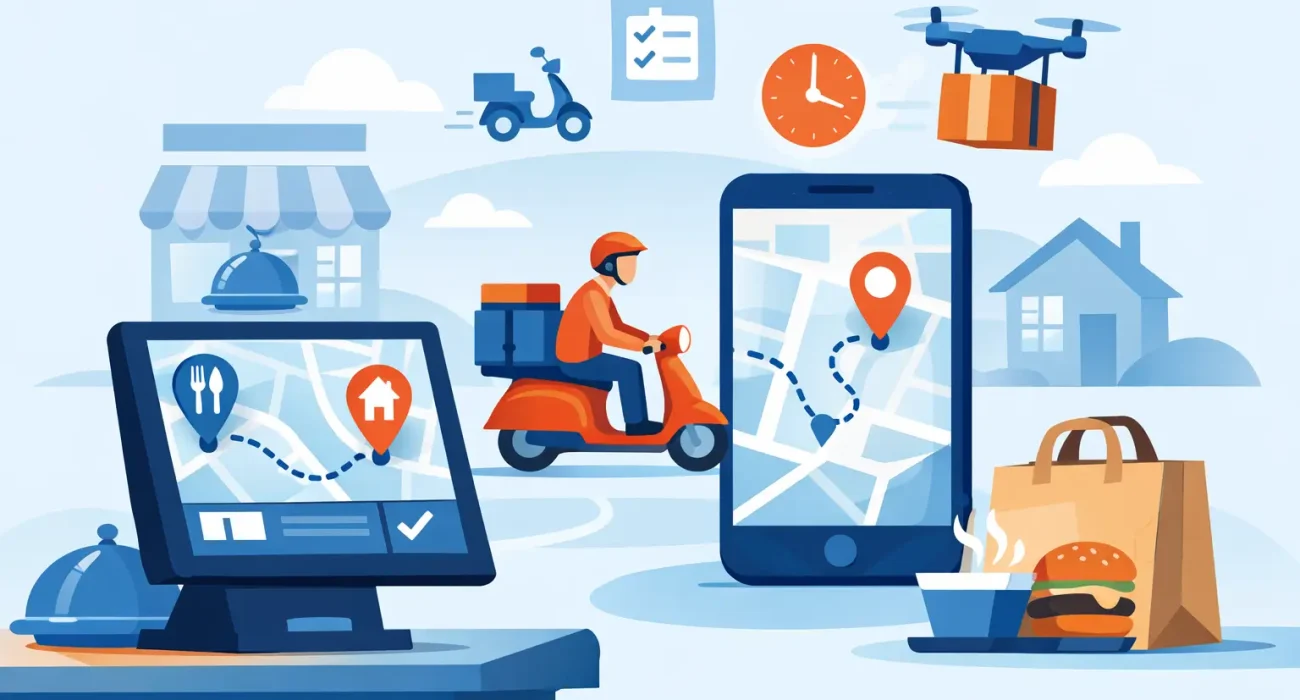
Friday night looks profitable until the phones start ringing. One customer says the app shows delivered, but no food arrived. Another wants to change the address after the driver has already left. Meanwhile, the kitchen is asking which orders are dine-in, pickup, and third-party delivery. This is where a restaurant POS for delivery tracking stops being a nice extra and starts becoming an operational necessity.
For restaurants handling their own drivers, marketplace orders, or a mix of both, delivery is no longer a side channel. It affects speed, labor, customer satisfaction, and repeat business. If the POS only handles billing and order entry, managers are left piecing together dispatch status from multiple screens, messaging apps, and handwritten notes. That creates delays, avoidable mistakes, and frustrated customers.
Why restaurant POS for delivery tracking matters
A good delivery workflow depends on timing. Orders need to reach the kitchen correctly, drivers need to be assigned quickly, and staff need a clear view of what is waiting, what is out for delivery, and what has already been completed. When those steps happen inside one system, operations become easier to control.
The real value is not just seeing a driver on a map. It is having one source of truth for the entire order journey. Staff can confirm when an order was placed, when it was accepted, when preparation began, when it was packed, when a driver left, and when the order was completed. That visibility helps reduce service issues and gives managers better data to act on.
For growing restaurants, this also has a direct financial impact. Delayed deliveries increase refunds and discount requests. Missed handoffs create food waste. Poor communication leads to negative reviews that affect future sales. A POS with built-in delivery tracking helps protect revenue by giving the team better control over each order after it leaves the counter.
What to look for in a restaurant POS for delivery tracking
The right system should do more than record a sale. It should support the pace and complexity of restaurant delivery operations.
Real-time order status
Your staff should be able to see the exact stage of each delivery order without switching between platforms. Clear statuses such as pending, in preparation, ready for dispatch, out for delivery, and completed help the front-of-house team answer customer questions quickly and accurately.
This matters even more during peak periods. If your team has to call the kitchen or message a driver every time a customer asks for an update, the process does not scale. Real-time status visibility reduces interruptions and keeps staff focused on service.
Driver assignment and dispatch control
Restaurants with in-house delivery need a practical way to assign orders based on location, driver availability, and order volume. Some POS systems offer basic dispatching. Others include advanced driver management with route sequencing and estimated delivery windows.
Not every restaurant needs the same level of control. A single-location business with a small delivery radius may only need simple assignment tools. A brand managing multiple drivers and high-volume delivery zones will benefit from more advanced dispatch features.
Integrated delivery channels
Many restaurants now accept orders from their website, mobile ordering system, phone calls, walk-ins, and third-party apps. If those orders flow into separate tools, staff spend more time re-entering data and correcting mistakes.
A better setup brings those channels into one POS environment. That helps the kitchen prioritize accurately and lets management compare delivery performance across channels. It also reduces the chance of duplicate orders, missed tickets, or inconsistent pricing.
Customer address and delivery history
Repeat customers should not feel like first-time customers every time they order. A capable POS stores delivery addresses, order preferences, contact details, and past order history so staff can work faster and serve customers better.
This is especially useful when issues happen. If a customer says an address was entered correctly last time, your team can check the record immediately instead of relying on memory. Small details like this improve trust and shorten problem resolution.
Reporting that helps management make decisions
Delivery tracking should feed into reporting, not sit in isolation. Managers should be able to review average delivery times, driver productivity, late orders, peak delivery hours, and cancellation patterns.
These reports help answer practical questions. Do you need another driver on weekends? Are certain zones consistently late? Are third-party orders slowing down your own delivery service? Without reporting, problems stay anecdotal. With reporting, they become manageable.
Common problems a POS can solve
Restaurants often know delivery is underperforming before they know exactly why. Orders go out late, complaints rise, and staff start working around the system instead of through it.
One common issue is fragmented communication. The cashier takes the order, the kitchen prints the ticket, the shift lead texts a driver, and the customer calls back for an update. Each step works on its own, but the full process is disconnected. A POS with delivery tracking reduces that fragmentation by keeping order details, statuses, and dispatch information in one place.
Another issue is lack of accountability. If there is no timestamp for when food was packed or when the driver left, it is hard to know where delays happen. Was the kitchen slow, or did the driver wait too long to leave? Good tracking creates visibility across the chain so managers can address the actual bottleneck.
Then there is the customer service problem. When staff cannot answer a basic delivery question confidently, the customer assumes the restaurant is disorganized. Even if the food arrives hot and correct, the service experience already feels weak. A POS that supports quick order lookup and live status updates helps your team sound informed and in control.
Choosing the right fit for your restaurant
Not every restaurant needs the same system, and this is where many buying decisions go wrong. Owners sometimes choose a POS with impressive features that do not match daily operations. Others go too basic and outgrow the setup within months.
If your restaurant relies mainly on dine-in and only handles occasional local delivery, you may not need advanced fleet management. You do need clean order handling, status visibility, and reliable customer records. If delivery is a major revenue stream, or if you plan to expand locations, your POS should support more structured dispatching, multi-channel integration, and stronger reporting.
There is also the question of local implementation and support. A feature list only tells part of the story. Restaurants need training, setup that matches actual workflows, and responsive support when service hours are on the line. That is one reason businesses in Qatar often prefer a technology partner that understands the local operating environment, payment expectations, and day-to-day pressure inside hospitality businesses.
Implementation matters as much as software
A delivery-focused POS can improve operations quickly, but only if the rollout is handled properly. Menus need to be structured correctly. Order types must be configured clearly. Staff need training that reflects real service scenarios, not just generic system demos.
It also helps to define what success looks like before launch. That might mean reducing average delivery time, cutting order errors, improving dispatch response, or giving managers better visibility into peak-hour performance. When the business has clear goals, it is easier to configure the system around outcomes instead of just features.
Restaurants should also think ahead. Will the POS still support your operation if delivery volume doubles? Can it connect with your online ordering setup? Will it help if you add more drivers or another location? A system that fits today but limits tomorrow can create another costly transition later.
For businesses that want both operational technology and practical support, working with an experienced provider like SDQ Tek can make implementation more effective. The value is not just in supplying software. It is in tailoring the setup to the way the restaurant actually works and supporting the team after go-live.
Delivery tracking is now part of the guest experience
Customers do not separate food quality from delivery experience as much as restaurants sometimes think. If the order is late, hard to track, or poorly communicated, that affects the full perception of the brand. A strong POS helps restaurants manage that experience with more consistency.
This does not mean every operation needs the most advanced system on the market. It means restaurants need a solution that gives clear visibility, dependable order flow, and better control over what happens after checkout. When delivery becomes easier to manage, teams work with more confidence and customers get a more reliable experience.
The right restaurant POS for delivery tracking gives you something every growing restaurant needs – fewer blind spots when the pace gets busy.