

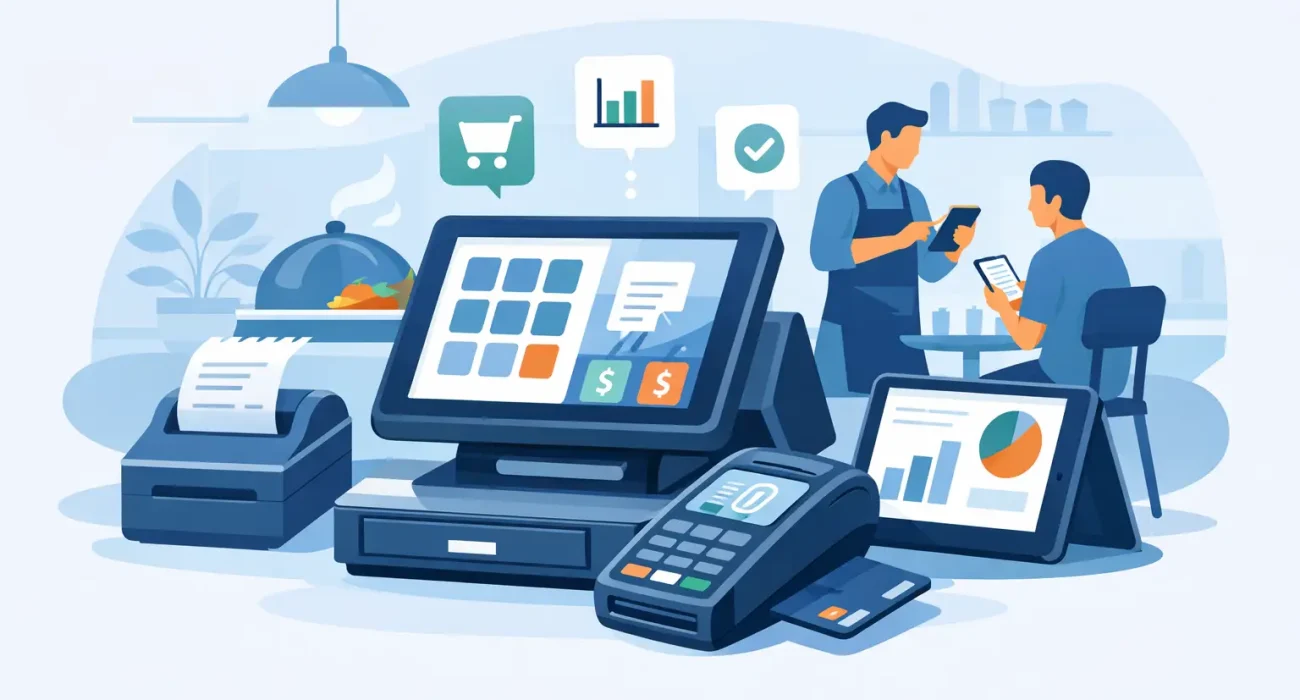
The lunch rush does not wait for slow billing, missing kitchen tickets, or a cashier trying to fix an outdated machine while orders pile up. For a restaurant owner, those few minutes can mean lost sales, frustrated staff, and unhappy customers. That is why choosing the right restaurant POS system for small business operations is not just a tech decision. It is an operational decision that affects speed, accuracy, control, and growth.
Small restaurants often start with simple tools because they need to open quickly and keep costs down. That works for a while. But as orders increase, delivery channels expand, and reporting becomes more important, the gaps start to show. Manual billing creates errors. Separate systems for dine-in and takeaway waste time. Inventory becomes harder to track. Staff performance becomes difficult to measure.
A good POS system helps solve those problems without adding unnecessary complexity. The best choice is usually not the one with the longest feature list. It is the one that fits the way your restaurant actually runs.
What a restaurant POS system for small business should do
At a basic level, a restaurant POS system should handle billing, order entry, and payment processing reliably. For a small business, that is only the starting point. The system also needs to support the daily pressure of restaurant operations.
That means sending orders clearly to the kitchen, managing table service if you offer dine-in, handling takeaway and delivery efficiently, and giving owners a clear view of sales. If your team is small, ease of use matters just as much as features. A system that takes too long to learn can slow service instead of improving it.
The strongest setups also connect front-of-house and back-of-house activity. When an order is placed, the kitchen should receive it quickly. When an item is unavailable, staff should be able to update availability without confusion. When the day ends, the owner should not need to piece together sales data from multiple tools.
Why small restaurants outgrow basic billing software
Many owners begin with simple billing tools or general retail POS software. The problem is that restaurant operations are different. A retail sale is usually straightforward. A restaurant order is not.
Customers modify items, split bills, move tables, request add-ons, and order across different channels. One order may include dine-in items, another may be for pickup, and another may come through delivery. Staff need to process all of that quickly and accurately.
Basic billing software often struggles with these details. It may not support kitchen printing properly. It may not handle combo items or modifiers in a practical way. It may also lack reporting that helps owners understand best-selling dishes, peak hours, or low-performing menu items.
This is where a purpose-built restaurant POS starts delivering real value. It reduces friction in the service flow and gives management better visibility into the business.
Key features that matter most
For most small restaurants, the most valuable features are the ones that improve speed and control. Fast order taking, table management, kitchen ticket routing, and simple payment handling make an immediate difference on the floor.
Inventory support is also important, especially if food cost control is a concern. Even a lightweight inventory function can help owners monitor stock movement, reduce waste, and avoid running out of high-demand items during busy periods.
Reporting should not be overlooked. Daily sales reports, item-level performance, cashier activity, and shift summaries help owners make better decisions. If you are trying to improve margins, expand your menu, or tighten staff accountability, reporting is not optional.
If your restaurant relies on delivery or takeaway, integration matters too. A POS should support those workflows without forcing staff to re-enter orders manually. Manual entry creates delays and increases mistakes.
Cloud-based or traditional setup
This decision depends on how you want to manage your business. A cloud-based POS gives owners the ability to check reports remotely, access updates more easily, and manage multiple devices with less friction. For many small businesses, that flexibility is useful.
A more traditional local setup may still suit some restaurants, particularly if they prefer on-site control or have very specific infrastructure needs. The trade-off is that updates, maintenance, and accessibility may be less convenient.
There is no universal answer here. The right choice depends on your comfort level, how often you need remote access, and how much support you expect from your technology provider. What matters most is reliability and practical fit.
Cost is important, but cheap systems can be expensive
Small business owners are right to look closely at cost. Budget matters. But the cheapest POS option often creates hidden costs in the form of downtime, limited support, poor usability, and missing features.
If your system crashes during peak hours, the monthly savings lose their value quickly. If your team needs workarounds for common tasks, labor inefficiency becomes part of the real cost. If reports are unclear, management decisions suffer.
A smarter approach is to look at total business impact. Ask how much time the system saves, how many order errors it helps prevent, how well it supports growth, and how responsive the provider is when something needs attention. Those factors usually matter more than the lowest starting price.
Support matters more than most owners expect
Restaurant operations run on timing. If a printer stops working or orders do not reach the kitchen, you need help quickly. That is why support should be part of the buying decision from the beginning.
Many small businesses focus heavily on features and pricing, then realize later that service quality makes the biggest difference. A dependable partner helps with setup, training, troubleshooting, and adjustments as the business changes.
This matters even more in local markets where business practices, payment preferences, and operational needs can vary. A provider that understands the local environment can usually implement faster and recommend a setup that suits the business more accurately. For restaurant owners in Qatar, working with a partner such as SDQ Tek can make the process more practical because support, customization, and ongoing service are built around real operating conditions.
How to choose the right system for your restaurant
Start with your service model. A café, quick-service restaurant, and full-service dining operation do not need the same workflow. Your POS should match how customers order, how staff work, and how your kitchen runs.
Next, look at your menu complexity. If your restaurant has modifiers, combos, special requests, and frequent updates, your system needs to handle those easily. If it cannot, staff will end up creating manual fixes.
Then think about growth. You may be operating one location now, but if you plan to add branches, expand delivery, or improve reporting, choose a system that can grow with you. Replacing a POS too soon is disruptive and expensive.
Finally, ask practical questions before committing. How long does implementation take? What training is included? What happens if internet access is unstable? How quickly is support available? These questions reveal whether you are buying software or building a working solution.
Common mistakes to avoid
One common mistake is choosing based only on price. Another is buying a system with advanced features the team will never use. Both create frustration.
It is also risky to ignore staff usability. If the interface is confusing, service slows down and training takes longer. Owners should involve the people who will use the system every day, not just the people approving the budget.
Another mistake is treating POS selection as a one-time purchase instead of an operational investment. Restaurants change. Menus evolve, customer volume shifts, and new sales channels appear. Your system should be flexible enough to keep up.
The right POS should make the business easier to run
A restaurant POS should reduce pressure, not add more of it. For a small business, the right system helps staff move faster, gives owners better control, and creates a smoother experience for customers.
That result does not come from flashy features alone. It comes from choosing a system that fits your workflow, supports your team, and comes with dependable service behind it. When the setup is right, technology stops being a daily concern and starts doing its job quietly in the background.
If your current process still depends on manual fixes, disconnected tools, or guesswork at the end of the day, it may be time to choose a system built for the way your restaurant actually operates.