

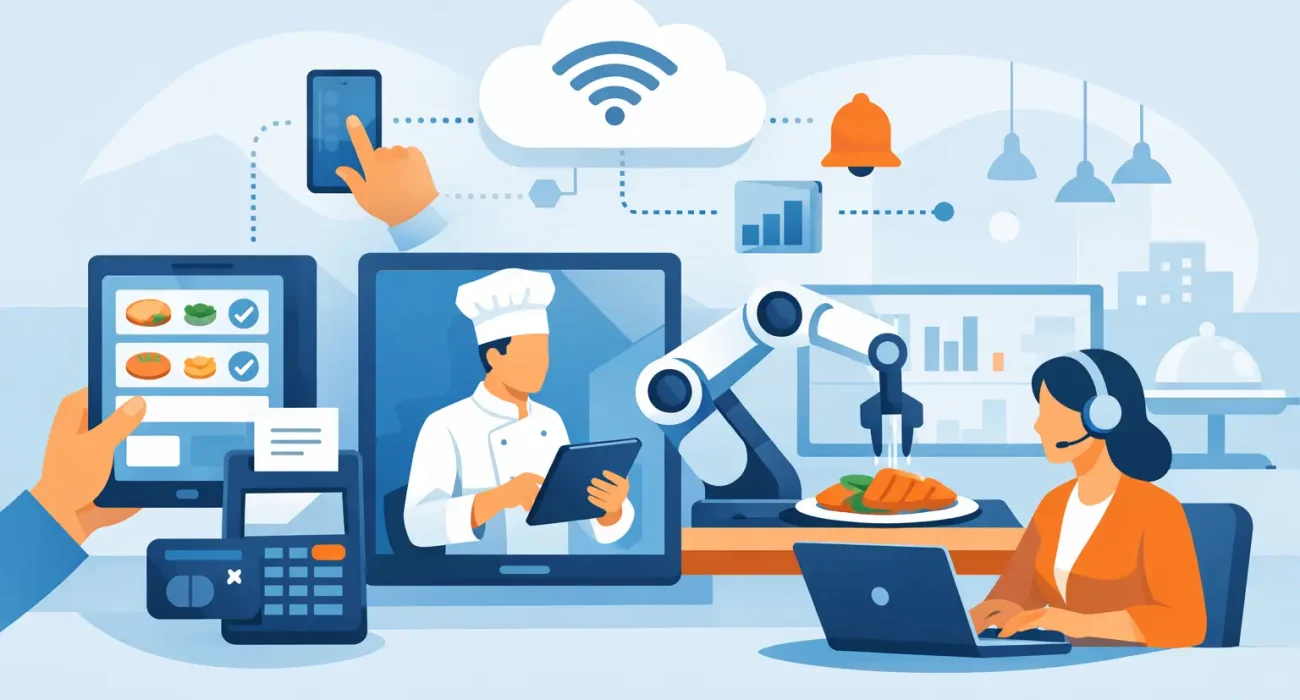
A new POS should not slow down your Saturday dinner rush. Yet that is exactly what happens when restaurants buy software first and plan second. A strong restaurant technology implementation guide starts with operations, not features. If the goal is faster service, cleaner reporting, tighter inventory control, or better guest convenience, every decision has to connect back to daily restaurant performance.
For restaurant owners and operators, technology is no longer a side project. It affects ordering speed, table turnover, staff accountability, payment processing, kitchen communication, and how customers interact with your brand online. The challenge is not finding tools. The challenge is putting the right tools in place without disrupting service or creating more complexity than the team can handle.
What a restaurant technology implementation guide should solve
Most restaurants do not struggle because they lack software options. They struggle because systems are added one by one, often in response to immediate pressure. A POS gets replaced. A QR menu is added. Online orders come through another platform. Inventory is handled separately. Marketing runs somewhere else. Very quickly, the operation becomes fragmented.
A practical restaurant technology implementation guide should help you avoid that pattern. It should answer a few basic questions clearly. What problem are you fixing first? Which systems need to talk to each other? How much change can your team realistically absorb at one time? And what level of local support will you need after launch?
That last point matters more than many businesses expect. A vendor can sell a system. A technology partner should help you apply it in a way that fits your service model, staffing structure, and growth plans.
Start with the operational gaps, not the product demo
Restaurant owners are often shown polished demos with attractive dashboards and long feature lists. Those presentations can be useful, but they do not tell you where your operation is losing time or money.
Begin by reviewing your current workflow from front of house to back of house. Look at order entry, kitchen communication, payment processing, stock tracking, delivery handling, reporting, and customer touchpoints. Where do mistakes happen most often? Where are staff repeating manual work? Where are delays affecting guest experience?
For one restaurant, the main issue may be slow checkout and billing errors. For another, it may be inventory leakage or disconnected delivery channels. A quick-service concept may prioritize speed and queue management, while a full-service restaurant may care more about table management and coordinated service timing. Technology should reflect those priorities.
Choose systems that fit the restaurant you run
Not every restaurant needs a large stack of tools. In many cases, fewer well-connected systems create better results than a long list of apps.
The foundation is usually the POS. That system influences sales tracking, menu management, discounts, staff permissions, reports, and payment flow. From there, the right additions depend on your operation. You may need QR code menus, kitchen display systems, online ordering, customer databases, loyalty tools, accounting integration, or multi-branch reporting.
The trade-off is simple. More capability can improve visibility and control, but it also increases training needs and setup complexity. A small independent restaurant may benefit from a focused setup that keeps service simple. A growing group with multiple branches may need broader reporting, centralized menu updates, and stronger management controls.
This is where tailored implementation matters. Restaurants in Qatar, for example, often need technology support that reflects local business realities, staffing patterns, and response expectations. A provider such as SDQ Tek brings more value when the conversation stays grounded in actual restaurant operations rather than generic software claims.
Build your implementation plan before installation day
A common mistake is treating implementation as installation. Hardware arrives, logins are created, and management expects the team to adapt immediately. That is not implementation. That is setup.
Real implementation includes planning the rollout in stages. First, confirm the business goals. Then define system requirements, menu structure, user roles, reporting needs, hardware placement, and integration points. After that, prepare data carefully. Item names, modifier groups, pricing, tax settings, printer routing, and inventory categories all need review before launch.
It is also smart to assign internal ownership. Someone on the restaurant side should be responsible for approvals, feedback, and coordination with the technology provider. Without that point of contact, decisions get delayed and small issues become launch-day problems.
Staff training is where most rollouts succeed or fail
Technology can be technically correct and still fail in practice if the staff is not comfortable using it. Restaurants work under pressure. During peak hours, nobody has time to search through menus, test buttons, or guess the right process.
Training should match roles. Cashiers, servers, supervisors, kitchen staff, and managers do not need the same level of system access or instruction. Show each group exactly what they need to do in real service conditions. That means practice with split bills, voids, discounts, busy kitchen flow, menu changes, and end-of-day reports.
Short, repeated training sessions usually work better than one long session. It also helps to identify a few internal champions who can support others during the first weeks. If your team depends entirely on external support for every small question, adoption will slow down.
There is also a people side to implementation that owners should not ignore. Some employees will welcome change. Others will worry that the new system is harder, stricter, or more exposed. Clear communication helps. Explain what is changing, why it is changing, and how it will make the work more manageable.
Test under real conditions, not ideal ones
A system that works at 11 a.m. with two test orders may struggle at 8 p.m. with a full dining room, delivery orders, and staff working at speed. Before full rollout, run realistic testing.
Check printer routing, kitchen tickets, payment devices, Wi-Fi stability, modifier logic, tax calculations, user permissions, and report accuracy. Test table transfers, refunds, discount approvals, and offline scenarios if internet service drops. If you operate delivery or takeaway, test those flows too.
This stage often reveals small setup issues that would be costly during live service. It is much better to adjust menu mapping or user permissions before launch than during a busy shift.
Measure results after launch
Implementation is not finished when the system goes live. The first 30 to 60 days matter just as much as the setup phase. That period tells you whether the technology is actually improving performance.
Track a few clear indicators. Order accuracy, average ticket time, void frequency, payment speed, inventory visibility, and reporting reliability are useful starting points. You can also watch customer-facing outcomes such as wait times, review trends, and online order completion.
Not every benefit shows up immediately. Some systems reduce errors right away. Others improve manager visibility over time. The key is to compare results against the original business problem. If the goal was faster service but staff are still creating workarounds, the issue may be training, setup, or process design rather than the software itself.
Common mistakes to avoid in a restaurant technology implementation guide
The most expensive implementation mistakes are usually avoidable. One is trying to change everything at once. Another is buying based on feature volume instead of operational fit. A third is underestimating support after launch.
Restaurants should also be careful with disconnected tools. A low-cost app may seem attractive on its own, but if it creates duplicate work or weak reporting, the real cost is higher. The same applies to poor hardware decisions. Tablets, printers, payment terminals, and network setup all affect reliability.
Finally, do not ignore the customer side of the experience. Technology should make ordering, paying, and interacting with your restaurant easier. If a new process confuses guests or slows service, it is not delivering the business value it should.
A practical way to move forward
The best implementation plans are realistic. They focus on the biggest operational priorities first, choose systems that fit the business model, and give the team enough support to use the technology confidently.
For some restaurants, that means starting with a stronger POS and better reporting. For others, it means adding QR menus, online ordering, or integrated business software to reduce manual work. There is no single correct stack for every concept. What matters is having a clear rollout plan, dependable support, and technology that helps the restaurant run better day after day.
When restaurant technology is implemented well, it does not call attention to itself. Staff move faster, managers see more, guests experience fewer delays, and the business operates with more control. That is the standard worth aiming for.